










Facelift Recovery, Day by Day: What to Expect
Written by Yongwoo Lee MD, board-certified plastic surgeon specializing in facial rejuvenation surgeries at VIP Plastic Surgery Korea
How Long Does Facelift Recovery Take?
Facelift recovery unfolds over months. A facelift is a single operation, but its result reveals itself gradually, and recovery follows a predictable arc. Swelling and bruising come first, then fade. The compression dressing comes off within the first days, the bulk of the visible recovery takes a few months, and the final result settles at around 10 to 12 months. The arc is similar whether a patient has a deep plane lift or a mini facelift.
This timeline helps patients plan their trip and tell normal healing from a problem. Most international patients stay in Korea about two weeks, which covers the early dressing changes, drain removal, aftercare, and the checks that make a long flight safe. Here is each stage, and how VIPPS supports it.
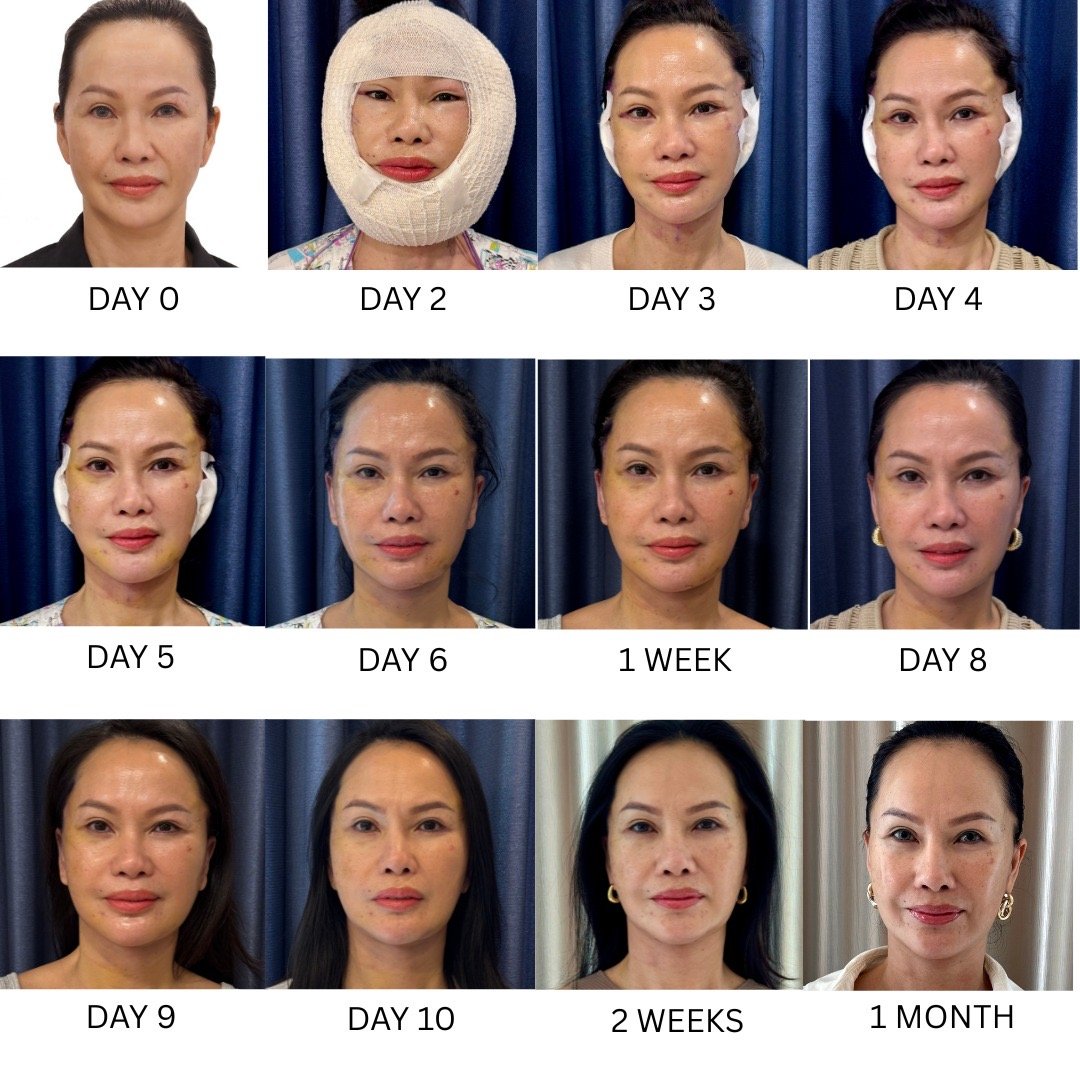
Deep plane facelift and fat grafting for patient in 40s – Recovery from day 0 to day 30
The Facelift Recovery Timeline, Stage by Stage
Here is the whole arc at a glance, with the detail for each stage below.
| Stage | What happens |
|---|---|
| Days 1–2 | Compression dressing and drain; highest hematoma risk |
| Days 3–7 | Swelling peaks, then eases; hemostatic net removed |
| Days 7–14 | Bruising fades; cleared to fly home |
| Weeks 3–6 | Bruising gone; firmness and numbness improve |
| Months 2–3 | Looks recovered; contour looks natural |
| Months 6–12 | Scars mature; final result complete |
Days 1 to 2: The First 48 Hours
Right after surgery a compression dressing wraps the face and neck to control swelling and bleeding. It usually comes off in full on day two, or a day or two later if the team is watching for a hematoma. A thin drain often sits under the skin to clear fluid. The team empties it at each morning dressing, checks the color and amount, and removes it within two to five days once the fluid runs light. This window matters most. Hematoma, a collection of blood under the skin, is the most common early complication after a facelift, and the risk peaks in these first 24 to 48 hours. So the team keeps the patient’s blood pressure calm and activity low. Patients can expect tightness and some numbness, and should rest.
Days 3 to 7: The First Week
Swelling usually peaks around day three, then eases. Bruising drifts downward with gravity and fades in color. During surgery the surgeon always places a hemostatic net, a set of fine transfixing sutures that hold the skin to the deeper layer and close the space where blood could pool. In a study of 405 patients, it removed early hematomas almost entirely, against a rate of about 14 percent without it. The net comes out on day three or four, once its job is done. If a small area of swelling appears, the team checks for a seroma (trapped fluid) or a hematoma (trapped blood). A mild case settles with light gauze compression for one to three days. If it looks like a true hematoma, the surgeon acts at once. Under local anesthesia the surgeon reopens a small part of the incision, clears it, and closes it again. Treating it early is what protects the result.
Days 7 to 14: Swelling Eases Before Travel
By the second week the bruising is fading and can often be covered with makeup. The skin was closed with fine, fast-absorbing sutures, so there are no stitches to remove. The surface pieces fall away on their own at around two weeks, and any remainder is absorbed by about six weeks. Patients can fly home once the doctor clears them, usually around the two-week mark.
Weeks 3 to 6: Settling
Most bruising is gone. Swelling keeps falling, though the face can still feel firm or a little lumpy. That firmness is healing tissue and leftover fluid, not the final shape. Numbness around the ears and cheeks improves slowly. It comes mainly from stretch on the great auricular nerve during the lift, and sensation returns over weeks to months. Light daily activity is fine.
Months 2 to 3: The Bulk of Visible Recovery
By now most people look recovered to those around them. The larger swelling is gone, the contour looks natural, and the firmness keeps softening. The scars are still maturing and may look pink.
Months 6 to 12: The Final Result
The deep tissues fully settle and the last subtle swelling resolves. The scars mature into fine, pale lines tucked around the ears and hairline. The final result is usually complete at 10 to 12 months.
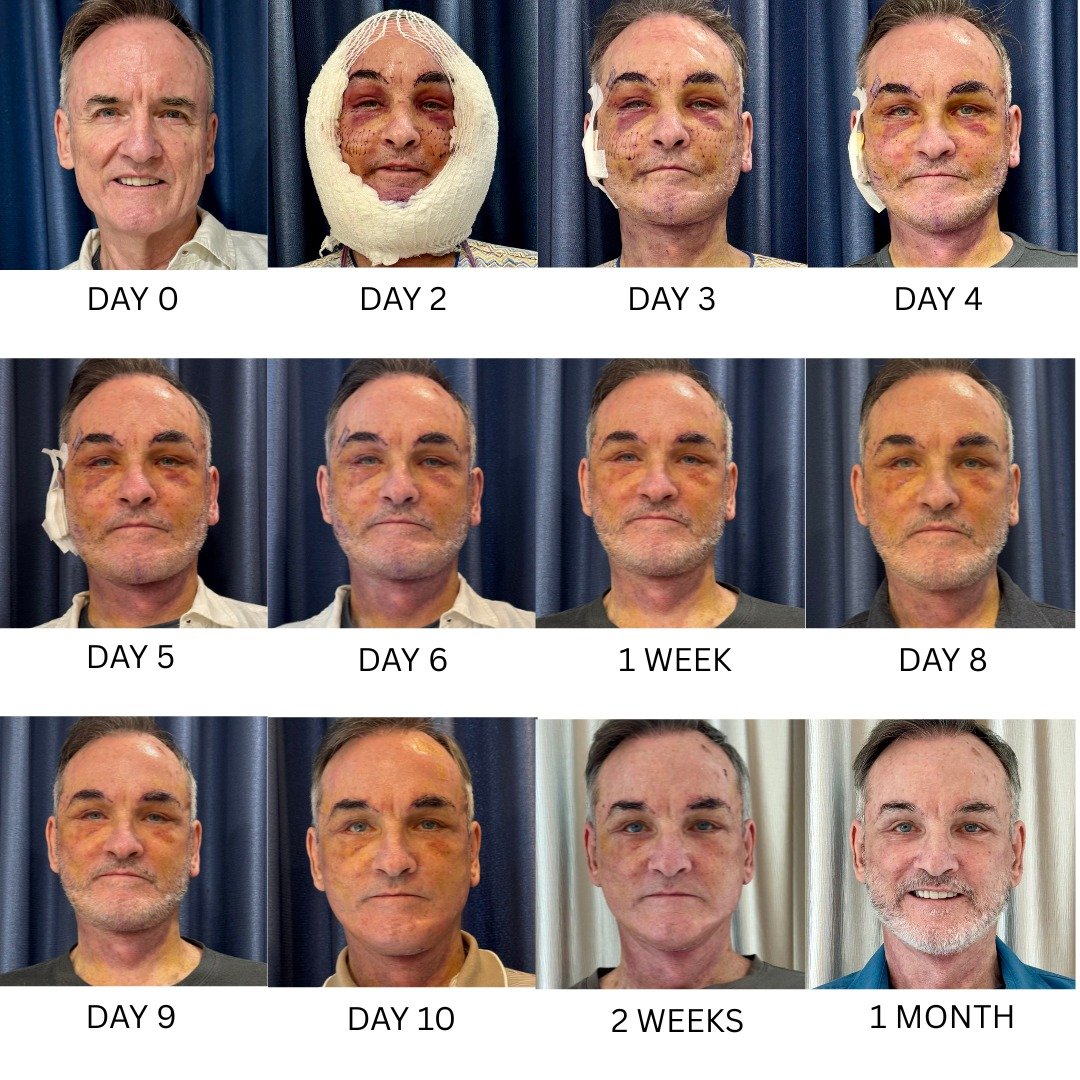
Deep plane facelift, necklift, blepharoplasty, fat grafting for patient in 70s – Recovery from day 0 to day 30
What to Avoid for a Fast, Safe Recovery
A few restrictions protect the result. Most keep the patient’s blood pressure down and keep tension off the healing incisions.
When Can Patients Exercise?
Gentle walking is encouraged from the first days. Patients should avoid strenuous exercise, heavy lifting, and bending the head down for about three to four weeks, since they raise blood pressure and with it swelling and bleeding. Most patients return to full workouts by around six weeks.
When Can Patients Shower, Swim, or Use a Sauna?
The incisions should be kept dry at first. For roughly the first week the patient’s hair is washed for them, so the scalp stays clean while the wounds stay dry. Gentle showering begins only once the doctor confirms the incisions have healed enough, usually around a week. Patients should avoid submerging the face in baths, pools, hot springs, or the ocean, and avoid saunas and jjimjilbang, for about four to six weeks. Heat worsens swelling, and shared water is an infection risk while the incisions seal.
Why Ignoring This Causes Scars
A fresh incision is weakest in the first weeks, and a scar keeps remodeling for up to a year. If it is pulled by early activity or stretched by swelling, it heals wider, because the body answers tension with more scar tissue. Sun on an immature scar can leave a permanent dark mark. Following the restrictions keeps the incisions tension-free and protected, so they fade into thin, pale lines instead.

How VIPPS Speeds Up Recovery
Recovery is not only about waiting. The right aftercare lowers swelling, protects the tissue, and gets patients looking well sooner. The VIPPS program pairs medical care with real rest in Jeju.
- Doctor’s dressing. The patient’s dressings are changed by the doctor, so the compression stays correct and any issue is caught early.
- Professional hair washing. For about the first week a caretaker washes the patient’s hair, keeping the scalp clean while the incisions stay dry.
- Injections and a vitamin IV drip. These support healing and comfort early on, and vitamin C helps build the collagen that closes a wound.
- Hyperbaric oxygen therapy. Breathing oxygen at raised pressure delivers more of it to the healing skin, supporting repair and helping swelling settle.
- LED light therapy. Medical LED light calms inflammation and supports the skin as it heals.
- Nutritious meals. Healing runs on protein and micronutrients, so meals are built to support wound repair.
- Rest in the nature of Jeju. Calm speeds healing. Quiet time in Jeju’s clean air lowers stress, steadying blood pressure and improving sleep.
- Meditation with the sounds of Jeju. Guided meditation set to the island’s natural sounds helps the patient rest and keeps blood pressure calm early on.
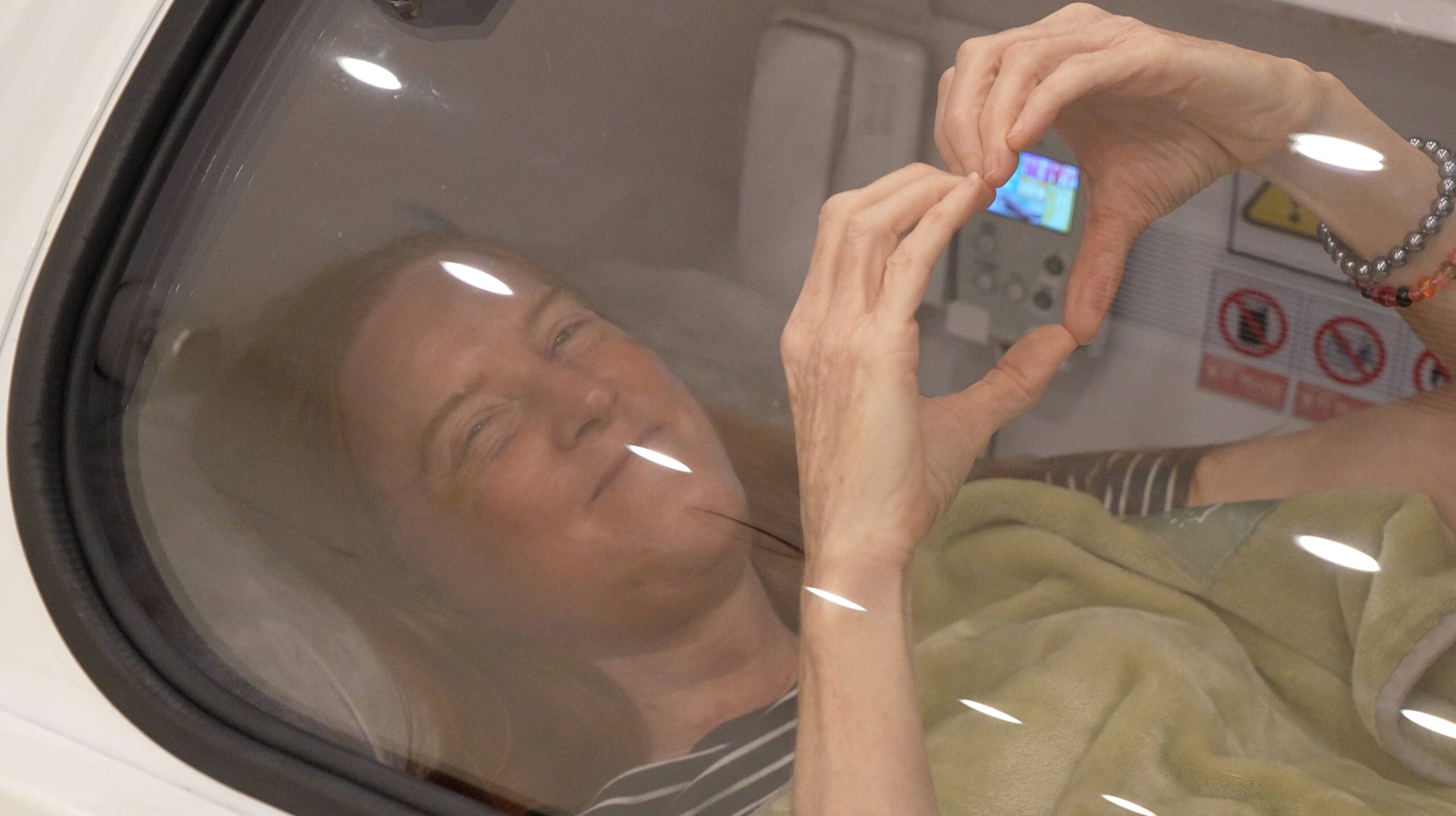
Lymphatic Massage: Care That Begins After One Month
Surgery disrupts the small lymphatic channels that drain fluid from the face, so fluid lingers. Around one month later, once the tissues are past the fragile early phase, the team begins manual lymphatic drainage. This light massage guides the trapped fluid toward channels that still work, so the last of the swelling and firmness clears faster. Starting earlier can disturb healing tissue, which is why the clinic waits.
For Patients From Out of Town
Recovery is easier when care is close. Patients who travel to VIPPS can stay at Hi Residences, in the same building as the clinic in Jeju. For about two weeks, they take the elevator down for dressing changes and aftercare, then go back up to rest. This daily contact lets the team guide each stage and catch anything early, which is a large part of why VIPPS patients heal quickly and go home confident.
Surgeon’s Insight
“The surgery is one day. The result is built over the weeks that follow. When I can see a patient every day, change the dressing myself, and manage the swelling as it happens, the recovery is smoother and the final result is better. That daily contact is the quiet reason our patients do so well.“
Planning the Recovery
As a simple guide, patients should plan for about two weeks in Korea, a few months for the bulk of the visible recovery, and up to 10 to 12 months for the final result. Most of that time they will be living normally. Patients still choosing a procedure can start with the VIPPS guides to the best age for a facelift and the types of facelift.
Frequently Asked Questions (FAQ)
Q1: How long does facelift recovery take?
The compression dressing comes off around day two and any drain within two to five days. The skin is closed with dissolving sutures that need no removal. Most patients are ready for normal social life by about two weeks, the bulk of the recovery takes a few months, and the final result settles at around 10 to 12 months.
Q2: When can patients fly home after a facelift?
Most international patients stay in Korea about two weeks, so the team can manage the dressing and drain, run the early checks, and clear the patient before a long flight. The dissolving sutures need no removal.
Q3: When can patients exercise after a facelift?
Gentle walking is fine from the first days. Patients should avoid strenuous exercise and heavy lifting for about three to four weeks, since they raise blood pressure and swelling. Most patients return to full workouts by around six weeks.
Q4: When can patients shower, swim, or use a sauna after a facelift?
The patient’s hair is washed for them for about the first week, and gentle showering starts once the doctor clears the patient, usually around a week. Patients should avoid baths, pools, hot springs, the ocean, saunas, and jjimjilbang for about four to six weeks.
Q5: How can patients reduce swelling and prevent scars?
Patients should keep their blood pressure calm, follow the activity and heat limits, and protect the scars from the sun. The VIPPS aftercare adds doctor-managed dressings, hyperbaric oxygen and LED therapy, and lymphatic drainage from about one month.
All procedures carry inherent risks. This content is for informational purposes only and does not constitute medical advice. Patients should consult a board-certified plastic surgeon before making any medical decisions.