









Best Age for a Facelift: Based on Evidence
Written by Yongwoo Lee, MD, board-certified plastic surgeon specializing in facial rejuvenation surgeries at VIPPS
Is There a “Best” Age for a Facelift?
It is one of the first questions almost every patient asks. Am I too young? Am I too old? When is the right time? The honest answer is that there is no magic number. A facelift, or rhytidectomy, is not triggered by a birthday. It is triggered by changes in the deeper structures of the face, and those changes arrive on their own schedule. Genetics, sun exposure, weight history, and skin quality all play a part.
So this article skips the number. Instead, it looks at what the evidence says about how age affects your results and your safety. It also explains why the stage of aging, not the calendar, decides when to operate and which type of facelift suits you.
Why Facial Aging Has a “Window”
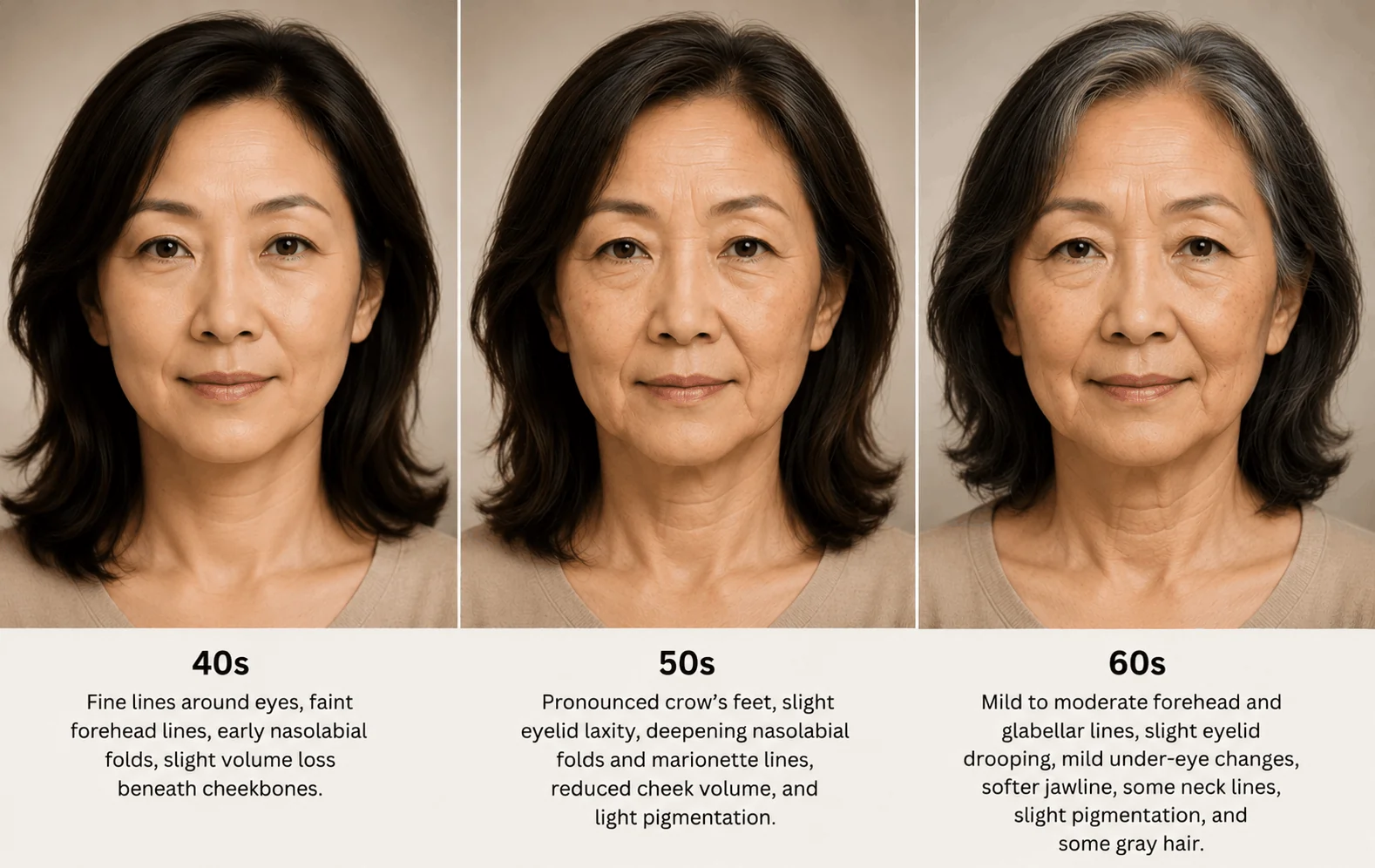
A facelift lifts the deeper layers of the face, then redrapes the skin over the restored framework. Several layers age at the same time. The skin loses collagen and elasticity. The fat pads deflate and slide downward, which forms jowls. The SMAS, the deep fibromuscular layer, and its retaining ligaments stretch and weaken. That weakening is the real mechanical cause of sagging. In later decades the facial bone itself begins to thin. Surgery works best while there is still firm skin to redrape and the descent is structural rather than simple volume loss. That is the window, and it opens earlier than most people expect.
What the Evidence Says About Age and Outcomes
The most cited study here comes from the official journal of the American Society of Plastic Surgeons. In a long-term review of SMAS-platysma facelifts, satisfaction was 97.8 percent at one year. It was still 68.5 percent at an average of 12.6 years. The researchers then split patients into three age groups: under 50, 50 to 60, and over 60. The under-50 group reported the highest and most consistent satisfaction at both early and late follow-up, and expert photo analysis agreed. The 50s group sat in the middle. The over-60 group still looked younger than their peers, but their results faded faster.
Part of the reason is biological. Younger skin has better elasticity and heals more strongly. There is also less descent to undo, so the correction remains subtle rather than dramatic. The authors even floated the idea of a “maintenance facelift” done earlier, while there is little to correct. By that logic, a patient in their late 40s with early jowling may do better with a deep plane facelift than with years of injectables that only treat the surface.
Is There an Upper Limit? Facelifts After 60 and 65
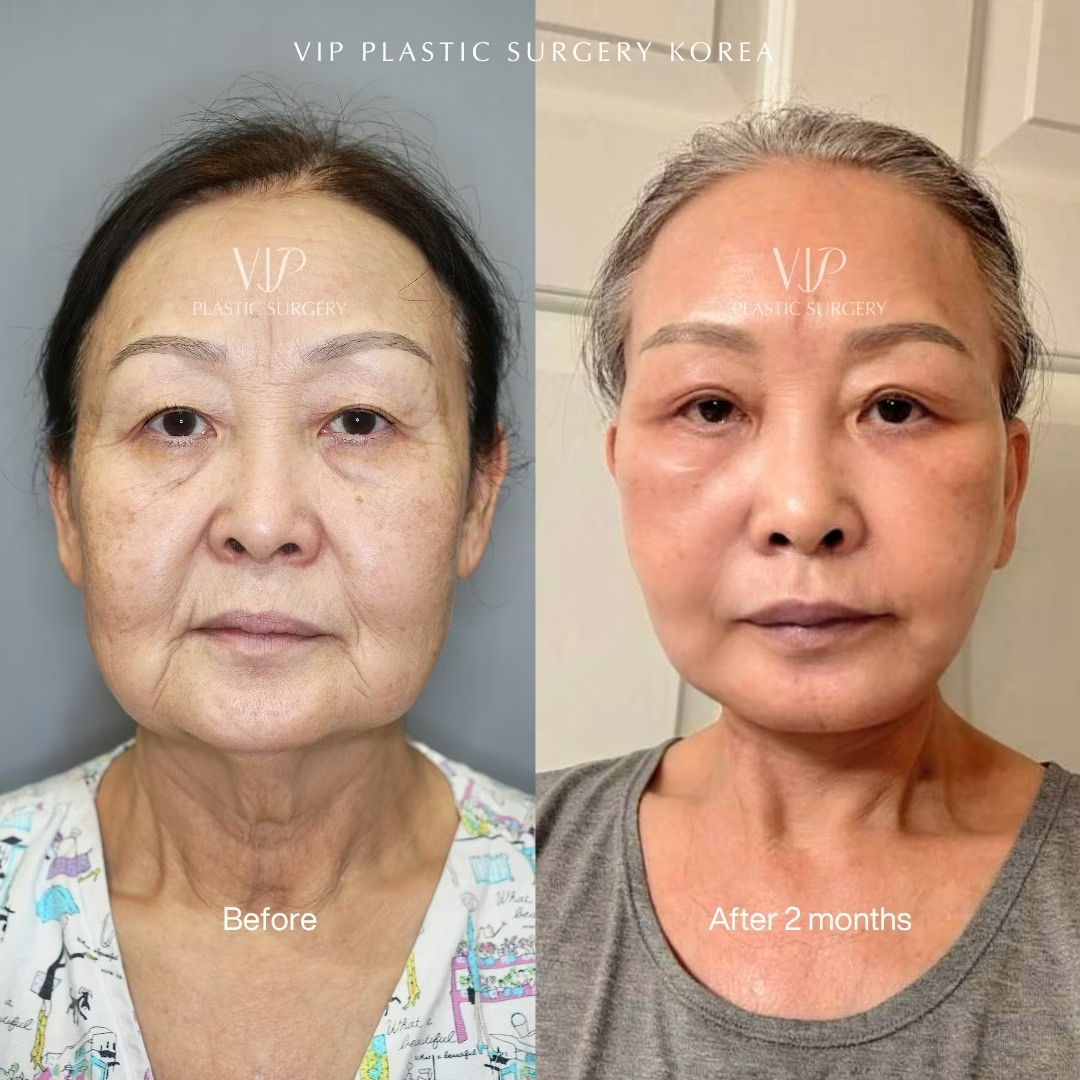
If younger patients do so well, should older patients stay away? The evidence says no. A well-known Cleveland Clinic study on facelift safety in older patients reviewed 216 cases. With careful screening, patients aged 65 and over showed no statistically significant rise in complications. Age by itself does not predict facelift risk. What matters in the older patient is general health and good screening, not the number on the chart. A fit, well-screened patient in their late 60s can be an excellent candidate.
Matching the Type of Facelift to Your Stage of Aging
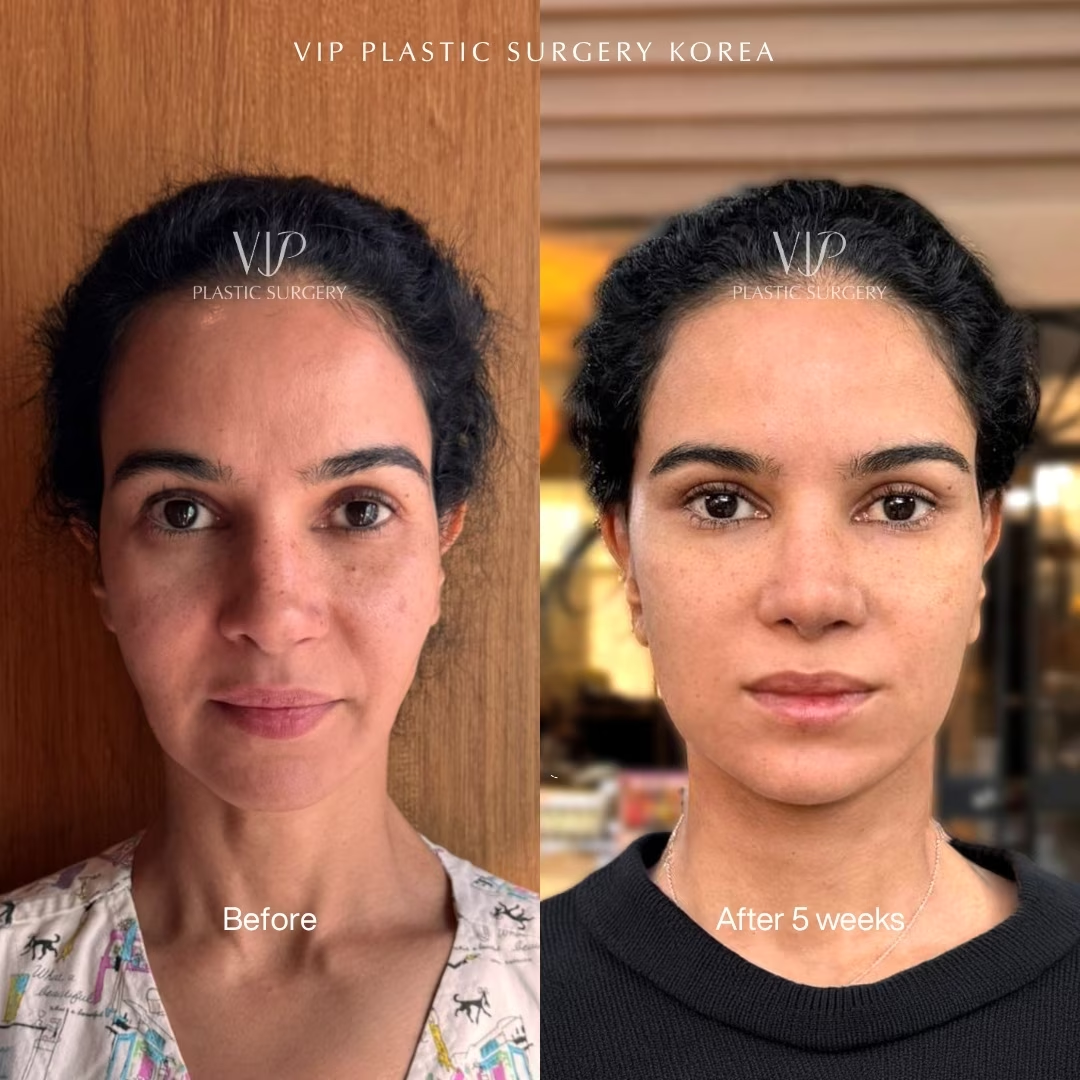
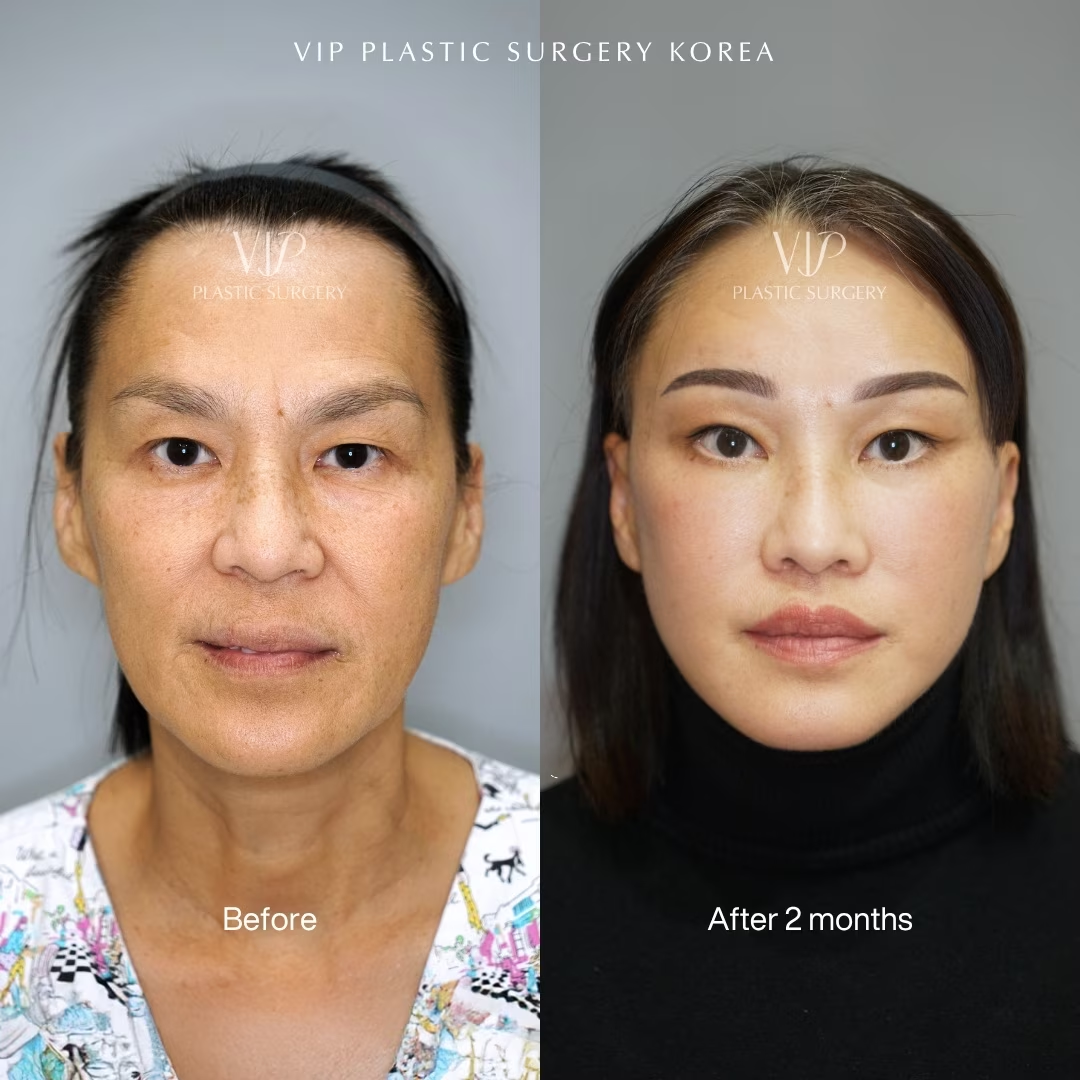
The right type of facelift depends less on your age than on how far aging has gone and which zone of the face has changed. The face ages from the top down, so the upper face, the midface, and the lower face each need different tools. Pick the wrong technique for your stage and you will either over-treat or fall short. For the technical details of each one, see our companion article on the types of facelift.
Endoscopic Lift for the Upper Face
An endoscopic brow and midface lift is not a tool for the jawline or neck. It works from above, through small incisions in the scalp, lifting the brow and cheek upward. That makes it right for the upper face, which is often the first zone to show age. It is usually paired with a lower-face procedure rather than used on its own.
Mini Facelift for Early Jowling
A mini facelift uses short incisions and focuses on the jawline and early jowls. It works mainly on superficial tissue, so it needs skin that still has good elasticity. Recovery is quicker, and the scars are smaller. The result is subtler and does not last as long, and it will under-treat anyone with established descent.
SMAS Plication for Moderate Jowling
A SMAS plication facelift handles moderate jowling. The surgeon lifts the skin as its own flap, then folds the SMAS over and stitches it. The SMAS is not cut, and the ligaments are not released, so the skin and the SMAS stay as separate layers. Because the work stays superficial and away from the deeper facial nerve, it is well established and lower in risk, and it suits thinner faces. Its limit is strength. Heavy descent can outpace what folded sutures hold.
Deep Plane Facelift for Advanced Descent
A deep plane facelift also works at the SMAS, but in a very different way, and this is where the two approaches truly differ. Rather than fold the SMAS, the surgeon releases the retaining ligaments and lifts the skin and the SMAS together as one composite. The midface, jowls, and neck move in a single motion. The lift comes from the released deep tissue, not from tension on the skin, so it looks natural and lasts the longest. That makes it the workhorse for advanced, multi-zone descent. It asks more of the surgeon, and recovery runs about two weeks.
The zones rarely age alone, so these procedures are often combined with volume fat grafting, eyelid surgery, or a neck lift to keep the whole face balanced. You will notice the table below has no age column. That is on purpose. The useful age ranges overlap so much that a number says little about which technique you need. The stage and the zone are what choose the technique.
| Procedure | Stage it treats | Zone | Recovery |
|---|---|---|---|
| Endoscopic brow and midface lift | Early brow and upper-face descent | Upper face, brow, cheek | About 10 to 12 days |
| Mini facelift | Early lower-face laxity | Jawline, early jowls | About 10 to 12 days |
| SMAS plication | Mild to moderate jowling | Lower face, jowls | About 12 to 14 days |
| Deep plane facelift | Advanced, multi-zone descent | Midface, lower face, neck | About 2 weeks |
Surgeon’s Insight
“Patients often arrive sure they should wait until the sagging is ‘bad enough.” In truth, the patient who comes in earlier, while the skin still has good elasticity and the descent is mild, almost always gets the most natural and the longest-lasting result. The best age for a facelift is the point where the structure has changed, but the tissue is still on your side.“
So, What Is the Best Age for You?
As a rough guide, most facelift patients are between their late 40s and mid-60s. The evidence suggests the earlier end of that range tends to hold up best over time. Still, the better question is not how old you are. It is what has changed in your face, and whether your skin and your health are ready for a clean result. A 46-year-old with early jowls and good skin can be a textbook candidate. So can a healthy, well-screened 68-year-old. A consultation is how you match the right procedure to the right moment.
Frequently Asked Questions (FAQ)
Q1: What is the best age for a facelift?
There is no single best age. Most patients have facelifts between their late 40s and mid-60s. Long-term data suggest that those who have surgery before 50 stay the most satisfied, because their skin and healing are stronger, and the correction is more subtle.
Q2: Am I too old for a facelift at 65 or 70?
Age alone is not a barrier. A Cleveland Clinic study found that, with careful screening, patients over 65 had no statistically significant rise in complications. General health, not age, is the deciding factor.
Q3: Does the type of facelift change with age?
It changes with your stage of aging more than your age. An endoscopic lift treats the upper face. A mini facelift treats early lower-face laxity. SMAS plication folds and tightens the SMAS for moderate jowling. A deep plane facelift releases the ligaments and lifts the skin and the SMAS together for advanced descent. Since the age ranges overlap, the choice comes down to which zone has changed and how much.
Q4: What is a “maintenance facelift”?
It means having a facelift earlier, while the signs of aging are still mild, to hold a youthful contour rather than reverse heavy sagging. The idea comes from research showing better long-term satisfaction in patients who had surgery before age 50.
All procedures carry inherent risks. This content is for informational purposes only and does not constitute medical advice. Consult a board-certified plastic surgeon before making any medical decisions.