









Asian Rhinoplasty in Korea
“What Is VIP Asian Rhinoplasty?” Flat Nose Correction & 3D Mid-Face Balance
Traditional rhinoplasty has typically involved the use of artificial implants, such as silicone for the nasal bridge, along with ear or septal cartilage to shape the nasal tip.
In many cases, both patients and even some surgeons perceive rhinoplasty simply as augmenting the nasal bridge by inserting an implant. However, this approach—particularly for Asian patients—often has limitations in achieving overall facial harmony.
Dr. Myung Ju Lee, a leading surgeon in structural rhinoplasty and the first author of peer-reviewed research on Asian rhinoplasty, has emphasized that nasal augmentation alone cannot fully address the underlying structural balance of the face.
While the bridge of the nose can be elevated, it does not sufficiently correct related features such as mid-face retrusion, mouth protrusion, a small chin, or prominent cheekbones. As a result, the outcome may not appear naturally balanced with the rest of the face.
In addition, traditional implant-based rhinoplasty is associated with a higher risk of complications, including contracture and skin irritation.
VIP Plastic Surgery introduces an advanced approach designed specifically for Asian patients, focusing on achieving full facial balance through a comprehensive and artistic method of rhinoplasty.
VIP Asian Rhinoplasty is a specialized technique developed by Dr. Myung Ju Lee, based on structural 3D principles. This integrated approach combines rib cartilage rhinoplasty with mid-face enhancement to create a more harmonious facial profile.
By utilizing autologous rib cartilage, this technique can address a flat or under-projected, wide nasal structure, as well as mouth protrusion, by creating a balanced three-dimensional proportion tailored to each patient.
The result is improved harmony among the nose, lips, and chin, while also softening the appearance of prominent cheekbones.
VIP Asian Rhinoplasty uses rib cartilage to reconstruct nasal support and enhance the mid-face in three dimensions. The inherent strength and stability of rib cartilage allow for more reliable structural support, particularly in cases involving a flat or under-projected nose and a retracted columella.
Because the procedure uses the patient’s own tissue, the risk of infection is significantly lower compared to synthetic materials such as Gore-Tex, silicone implants, or injectable fillers.
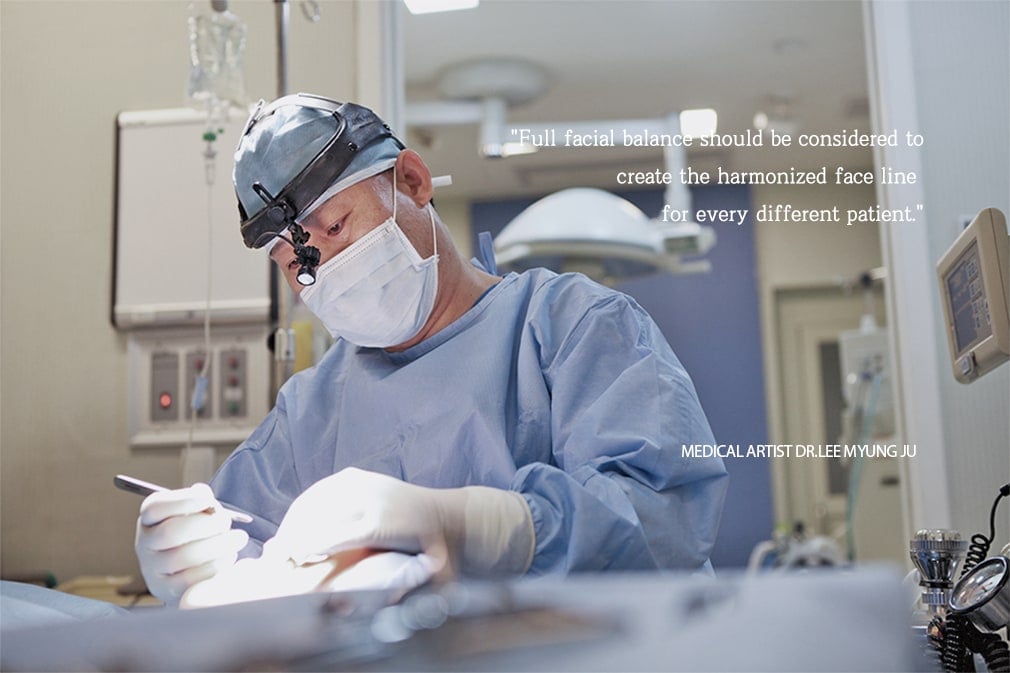
Doctor’s Message
Many patients who have undergone multiple rhinoplasty procedures do not achieve truly satisfying results. Why does this happen?
Based on my extensive experience in both researching and performing Asian rhinoplasty, I have identified that achieving true facial harmony remains a challenge for many patients—even after surgery.
In many cases, features such as mouth protrusion or a weak forehead and chin can prevent the face from forming a balanced and aesthetically pleasing profile. It is important to understand that the overall profile line—from the forehead through the nose and lips to the chin—plays a critical role in facial harmony.
Simply increasing the height of the nasal bridge, without addressing underlying structural imbalances such as a protruding mouth or a weak chin, often results in a nose that appears disconnected from the rest of the face rather than naturally integrated.
Harmony Rhinoplasty (rib cartilage rhinoplasty combined with mid-face augmentation) allows us to design a nasal structure that takes these factors into account.
For patients seeking more comprehensive improvement, combining rhinoplasty with adjunctive procedures can create a synergistic effect, resulting in a more balanced and harmonious profile.
Operation Information
- Surgery Time: 2 Hours
- Anesthesia Type: General Anesthesia
- Hospitalization : 0-1 Day
- Stitch Removal: 7-10 Days
- Recovery Time: 10-12 Days
VIP Asian Rhinoplasty Surgery Method

VIP Asian Rhinoplasty uses autologous rib cartilage to establish a strong structural foundation and provide reliable support for the columella, particularly in patients with a flat or sunken nose. This approach enables the creation of a more balanced, three-dimensional mid-face profile.
Compared to other types of autologous cartilage, rib cartilage offers sufficient volume and strength to reconstruct the entire nasal framework, including the bridge and tip, while providing stable support for long-term results. Its structural integrity and versatility make it especially suitable for complex rhinoplasty cases.
As a natural tissue from the patient’s own body, rib cartilage integrates well over time and carries a lower risk of complications compared to synthetic materials. For these reasons, rib cartilage rhinoplasty has become increasingly favored in advanced nasal reconstruction.
A portion of rib cartilage is used to build the nasal structure, while two to three small grafts may be utilized for mid-face augmentation. This combined approach can help improve mouth protrusion and soften deep nasolabial folds, contributing to a more harmonious overall facial profile.
For more information about mid-face augmentation, please refer to the dedicated section.
Illustration Simulation for VIP Asian Rhinoplasty
See the illustration below to see how the features differ with and without mid-face augmentation.

Before & after
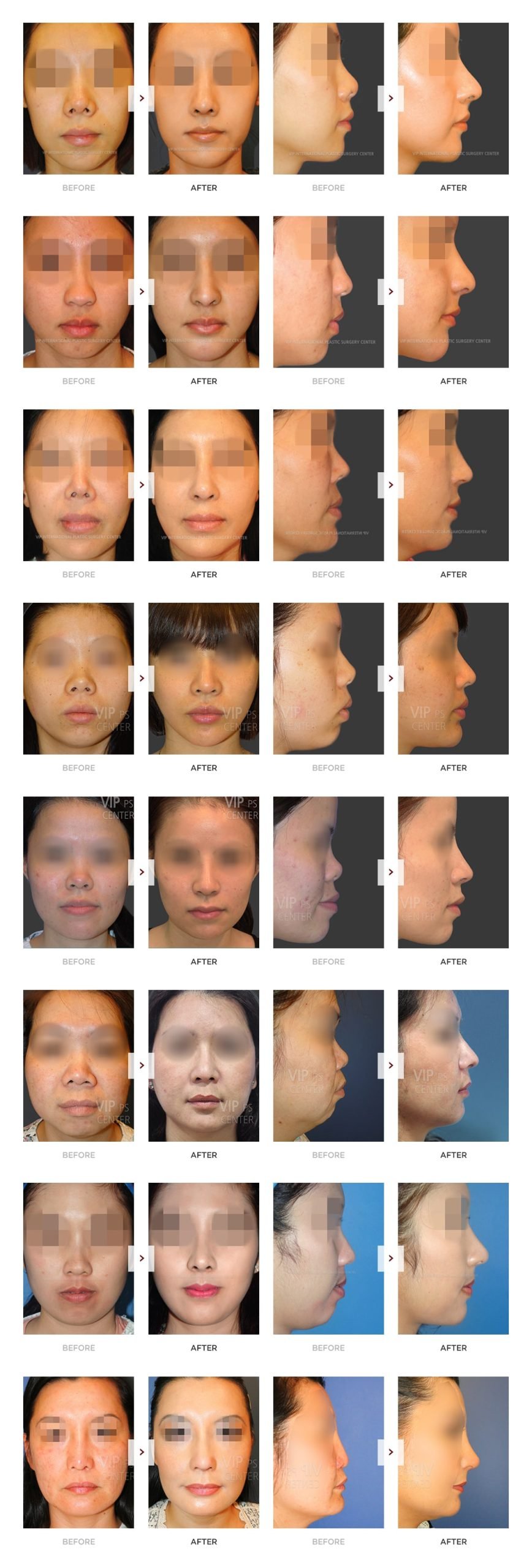
* Side effects such as inflammation after the surgery may vary for each individual and may require appropriate treatments. Please check the guidelines with the doctor.
About the Scarring Around the Ribs
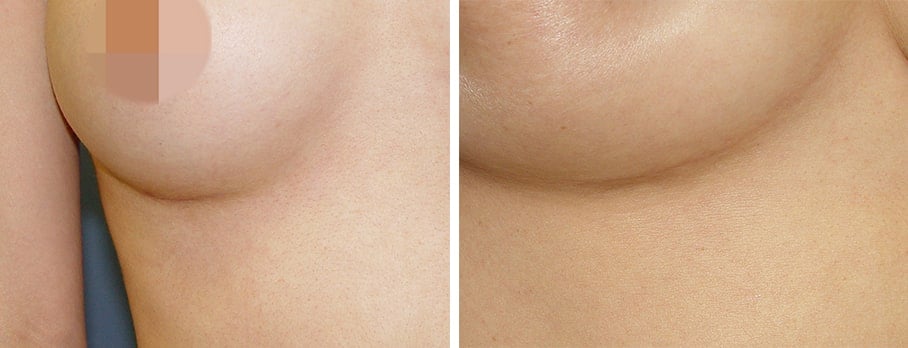
Are you worried about having a scar near the ribs? It is common to be concerned about the scarring due to the incision line from harvesting the rib cartilage. However, VIP Plastic Surgery performs a minimum incision (2-3cm) with an experienced technique to solve this problem. The incision line follows along the line underneath the breast line, and therefore, the line becomes almost invisible. If this incision line is taken care of with proper post-care, the incision line eventually fades away over time.
Comparisons between Double-jaw Surgery vs. VIP Asian Rhinoplasty
The double-jaw surgery is a well-known method for Asians to fix the protruding mouth and mid-face depression. This is the major surgery that moves both the upper and lower jaw structures or reduces gum, which requires the extraction of 4 teeth.
However, this double-jaw surgery is really for people who have a severe overbite or misalignment of the teeth, called malocclusion. This operation requires 1 to 2 years of orthodontic treatment. Also, there is a lot of blood loss during the surgery, and obstructive sleep apnea can occur as one of the side effects.
Meanwhile, the Society for Aesthetic Plastic Surgery is drawing its attention to the VIP Asian Rhinoplasty using rib cartilage, since it prevents the loss of teeth, and at the same time improves the mid-face depression, thus resolving the nose problems.
Ideal Candidates for VIP Asian Rhinoplasty
VIP Asian Rhinoplasty Surgery Point
Asian Rhinoplasty Patient V-Log
-
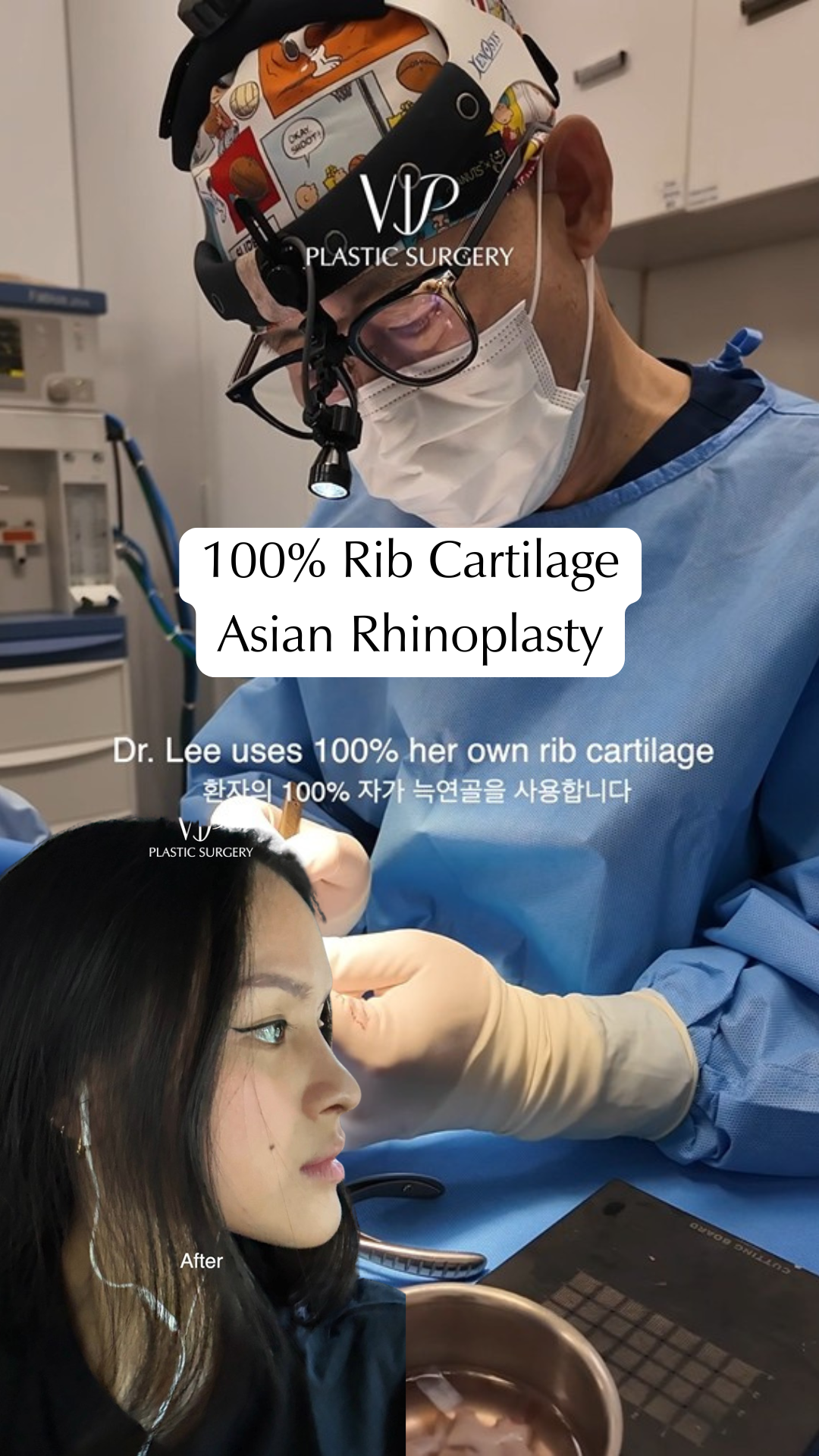 Before and After of 100% Rib Cartilage Rhinplasty
 -
 Asian Rhinoplasty Before and After
 -
 Asian Nose Surgery Transformation
 -
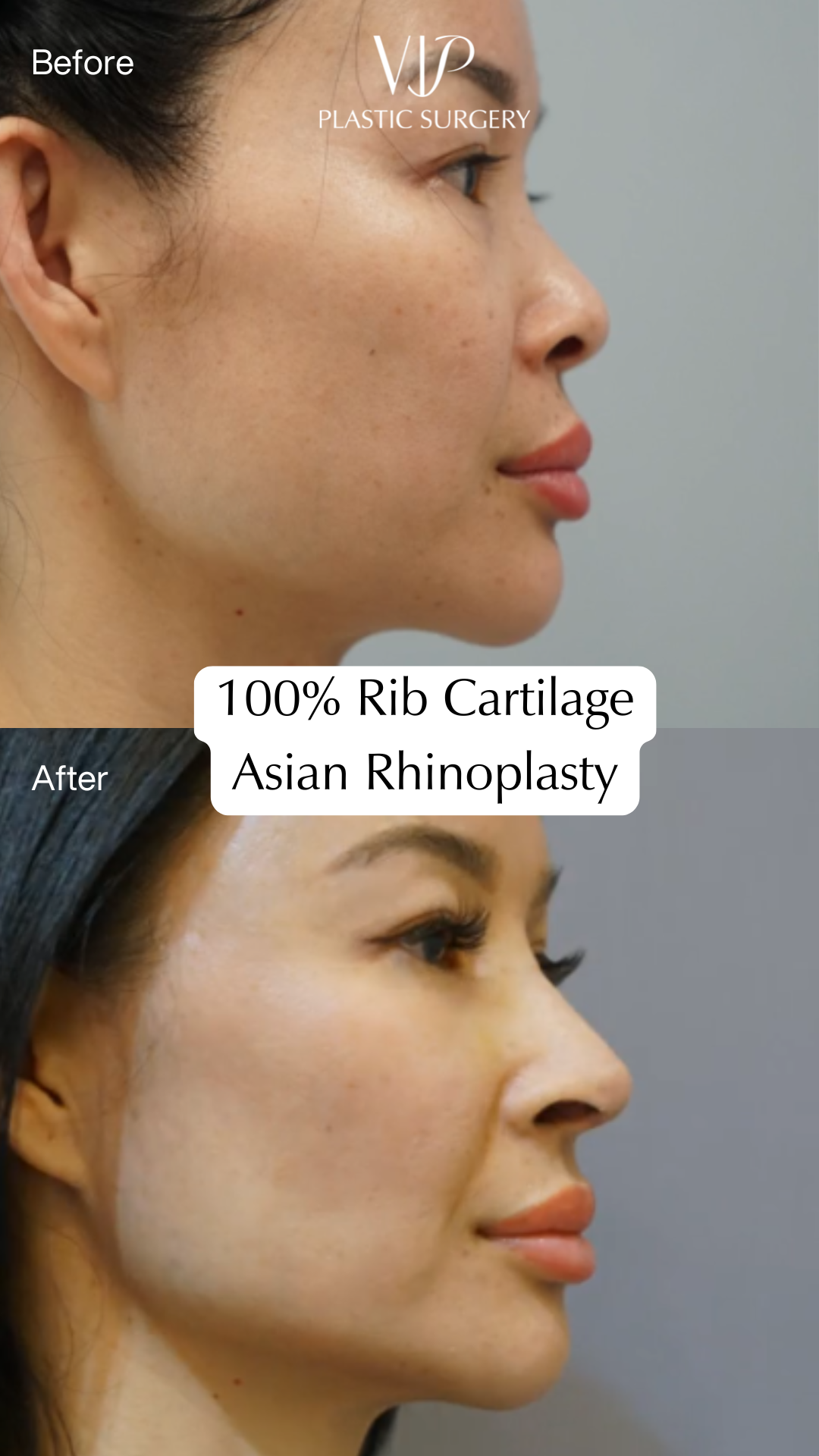 Asian Rhinoplasty Before After with 100% Rib Cartilage
 -
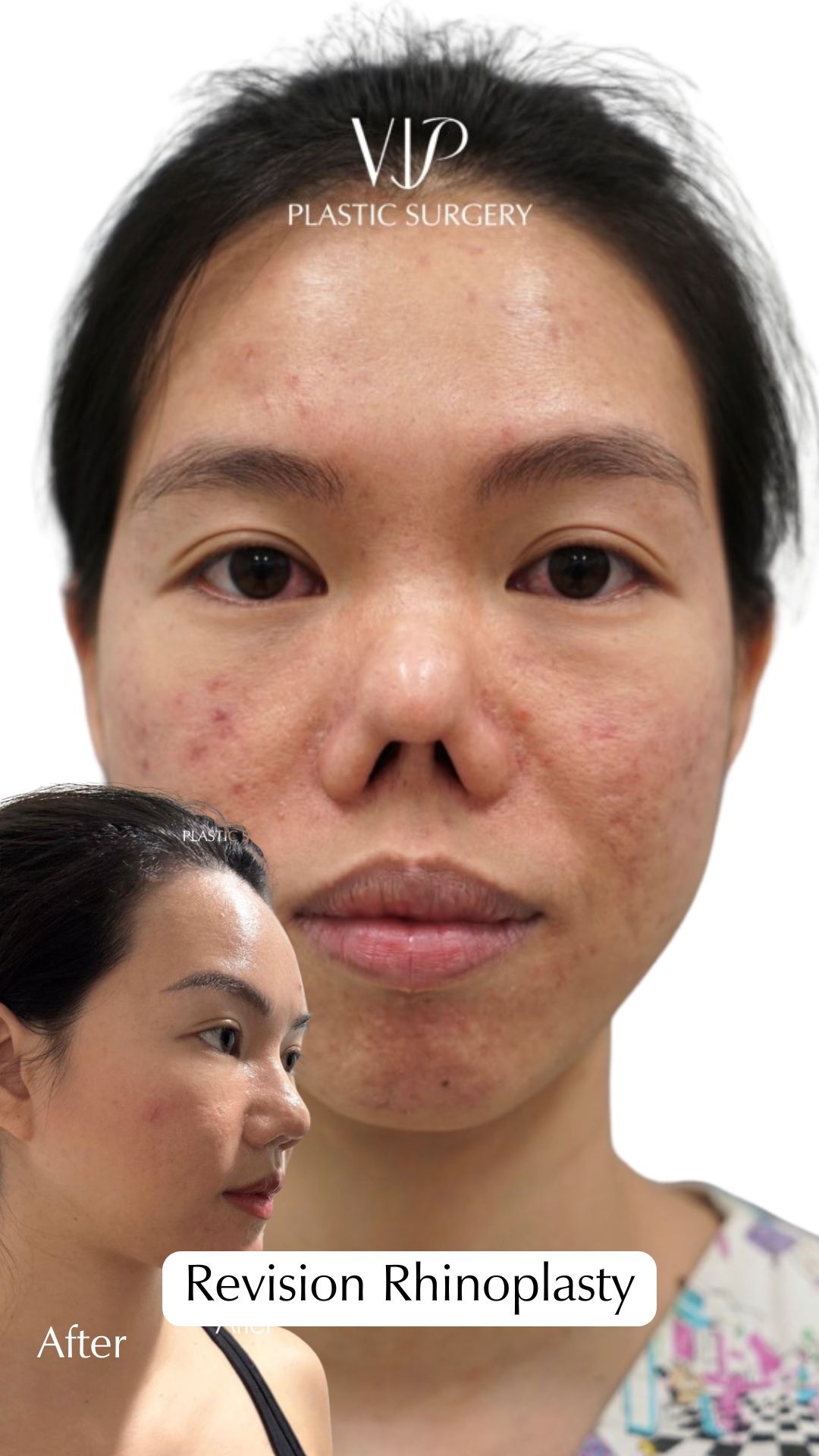 Revision Rhinoplasty – Reconstructive Surgery with Rib Cartilage