









Implant-Free Rhinoplasty: Why Autologous Cartilage Is Becoming the Preferred Choice
Rhinoplasty in Korea has evolved quickly. In the past, especially in Asian rhinoplasty, surgeons often used silicone implants or GoreTex to raise the bridge. These materials were convenient but did not always suit Asian anatomy, which often includes a lower bridge, softer cartilage and thinner skin. Over time, many patients experienced implant shifting, visible edges or an unnatural look.
As these issues became more common, many surgeons including Korean surgeons shifted toward shaping the nose with the patient’s own cartilage. Today, Autologous cartilage rhinoplasty is widely preferred for its natural appearance, compatibility and long term stability, making implant free rhinoplasty Korea a leading trend in Natural rhinoplasty Korea.
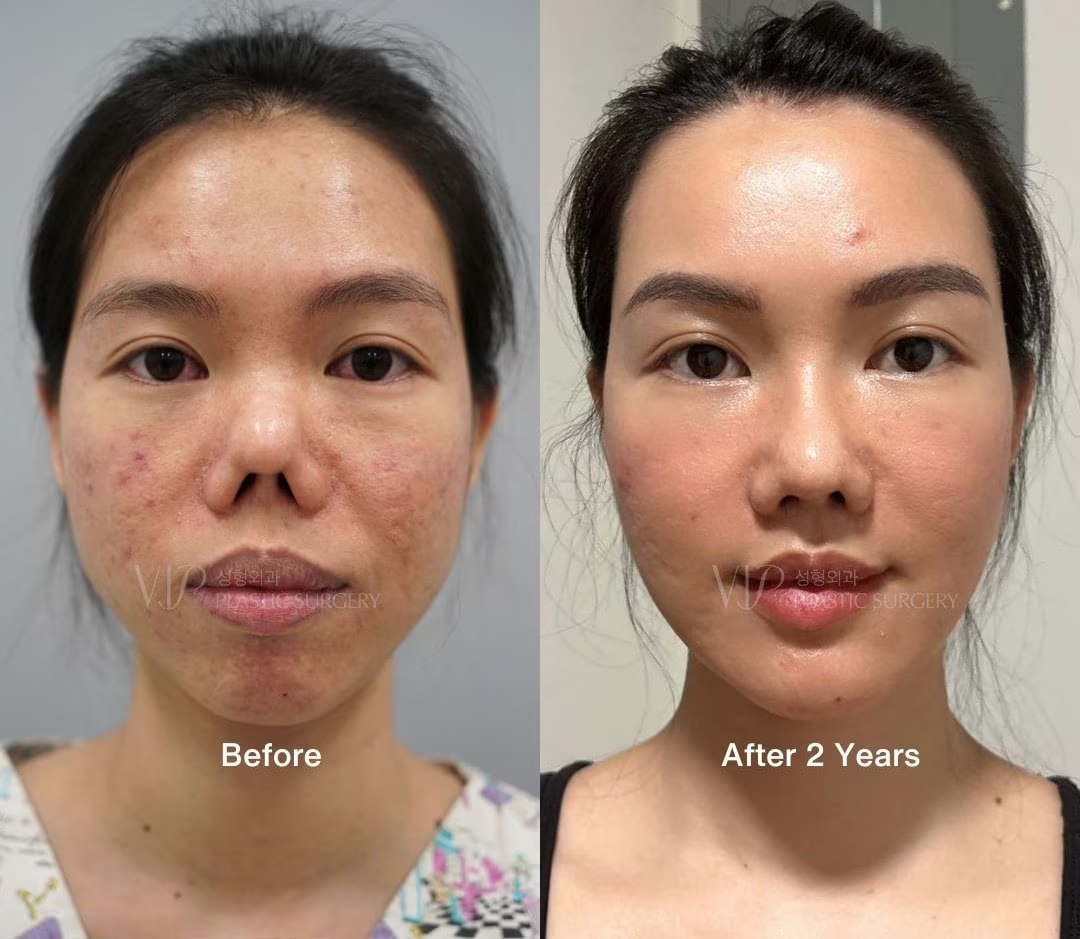
*The after photo was taken 2 years after the revision rhinoplasty.
Dr. Myung Ju Lee, chief surgeon at VIP Plastic Surgery, is recognized as the first surgeon in Korea to use rib cartilage for full structural reconstruction and is considered a true pioneer in this field. While many clinics still relied on silicone, he focused on cartilage based methods that strengthened the internal framework and helped define modern Asian rhinoplasty.
Dr. Lee believes the most reliable and long lasting results come from using the patient’s own tissue. Autologous cartilage has a natural structure that maintains its form over time, allowing the surgeon to create results that stay balanced and harmonious with different facial types. For this reason, Dr. Lee prefers using the patient’s own cartilage in both primary and revision rhinoplasty procedures, aiming to achieve a nose that looks natural and remains stable in the long term.
In the world of both reconstructive and cosmetic nose surgery, one question keeps coming up: why do so many surgeons now prefer autologous cartilage over silicone implants?
For many years, silicone implants were widely used in rhinoplasty. Over time, Korean surgeons and rhinoplasty experts around the world have reported several long term issues such as below.
Potential Problems with Silicone Implants
- a higher risk of infection
- thinning of the skin or visible implant edges
- implant movement as the years pass
- a firm or artificial appearance
- a shiny or sharp outline in thin skinned patients
Types of Autologous Cartilage Used in Korean Rhinoplasty
1. Septal Cartilage
Septal cartilage is taken from inside the nose. It is straight and strong and is often enough for patients with a naturally high bridge, but in many Asian cases the amount may be limited. Once used, septal cartilage cannot be used again for a revision rhinoplasty.
2. Ear Cartilage
Ear cartilage is soft and curved and it is ideal for shaping the nasal tip but is not strong enough to raise the bridge.
3. Rib Cartilage
Rib cartilage provides the greatest volume and the strongest support. It is the best choice for small or short noses, highly recommended for the revision cases or patients who need major reconstruction. When shaped correctly, rib cartilage creates a stable framework that holds its form for many years, making it central to many implant free rhinoplasty Korea procedures.

Surgery list: Rhinoplasty (using 100% autologous rib cartilage), Mid-face Augmentation
*The after photo was taken 2 months after the rhinoplasty.
Benefits of Using Your Own Cartilage
Using a patient’s own cartilage offers several key advantages that make it a preferred choice in asian rhinoplasty and natural rhinoplasty Korea:
- More natural look: Cartilage blends smoothly with the tissues, avoiding the stiff or shiny appearance that implants can create.
- High biocompatibility: Since it comes from the patient’s own body, the risk of infection or rejection is much lower.
- Long term stability: Cartilage keeps its shape over time and is far less likely to shift or become visible.
- Better for thin skin: For patients with delicate skin, cartilage gives a softer and more natural result than silicone.
- Ideal for revision cases: It provides strong support for rebuilding the nose after implant complications.
- Custom shaping: The surgeon can sculpt the cartilage to match each patient’s facial proportions, allowing for more balanced and natural outcomes.
Cartilage vs. Silicone Implants: Key Pros & Cons
| Categories | Autologous Cartilage | Silicone Implant |
| Natural Look & Feel | Very natural; blends with tissue | Can look less natural under thin skin |
| Long-Term Safety | Low risk of rejection or infection | Higher risk of shifting, thinning skin, extrusion |
| Stability Over Time | Strong, durable, ages naturally | May need replacement over time |
| Best For | Asian rhinoplasty, revision cases, small/short noses | Simple primary augmentation in select cases |
| Customization | Fully customizable to patient anatomy | Pre-shaped; limited personalization |
| Surgery Complexity | More skill required; longer procedure | Faster, simpler surgery |
In Korea, implant centered methods are rapidly being replaced by completely autologous cartilage based approaches. Experiences shared by surgeons worldwide including Korean experts show that rebuilding the nose with the patient’s own tissue is the most natural, safest and longest lasting method.

Dr. Myung Ju Lee’s philosophy supports this idea and is rooted in using natural materials whenever possible. He believes that using the patient’s own tissue leads to results that are safer, more stable, and more in harmony with the face. Whether someone needs a small refinement, added support, or a full reconstruction, autologous cartilage-based rhinoplasty is now widely recognized in Korea as the new gold standard in modern rhinoplasty.
Published on December 10th, 2025