










Planning a Facelift? What You Should Know About Fillers and Thread Lifts
When considering a facelift in the coming years, it is commonly assumed that fillers and thread lifts are harmless temporary solutions to “buy time” before surgery. However, surgeons who perform high volumes of facial rejuvenation procedures are increasingly cautioning patients about this approach.
The issue isn’t about competition between treatments. It’s about understanding how certain non-surgical procedures can affect the tissues that surgeons rely on during facelift surgery. VIP’s chief surgeon, Dr. Myung Ju Lee discuss about fillers and threads in the recent videos.
How Thread Lifts Can Complicate Future Surgery
Absorbable threads like PDO and PLLA work by creating tension along specific vectors to lift sagging tissue. While the lifting effect is temporary, the threads themselves can leave lasting changes in the tissue.
Even after the threads dissolve, surgeons frequently encounter fibrous tracts, adhesions, and micro-scarring in the exact planes they need to work within during a facelift. These changes can lead to:
- More difficult and time-consuming surgical dissection
- Dimpling or unexpected resistance when lifting tissue
- Altered tissue quality that affects blood flow assessment
- Less predictable surgical outcomes
The mechanism that allows threads to grip and lift tissue today can become the obstacle that prevents smooth, safe lifting tomorrow.
According to an interview with Health Chosun, Dr. Myung Ju Lee of VIP Plastic Surgery noted that “thread lifting has limitations in its ability to elevate deeper structures, making it suitable mainly for patients with mild sagging or those unable to undergo longer surgical procedures.” He also cautioned that “when performed by an inexperienced provider, thread lifts may cause facial asymmetry or unwanted contour irregularities.”
Source: Health Chosun Article ↗
The Filler Complication: When Volume Correction Becomes a Surgical Challenge
Hyaluronic acid fillers are valuable tools when used appropriately for genuine volume loss. However, complications arise when fillers are used to compensate for structural laxity, particularly in the lower face.
Common Issues with Pre-Surgical Filler
When patients receive escalating filler volumes in areas like the tear troughs, cheeks, or prejowl region, surgeons often observe what they describe as “pixelation” of facial contours:
- Puffiness and blurred transitions between facial zones
- A heavier, bulkier appearance
- Distorted natural anatomy that complicates surgical planning
The Biostimulator Factor
Biostimulatory fillers present an additional challenge by triggering chronic fibrosis that stiffens the natural tissue planes. While hyaluronic acid fillers can be dissolved with hyaluronidase, the process isn’t always straightforward. When filler has migrated across multiple tissue layers, complete removal without creating surface irregularities may not be possible.
Most surgeons prefer a wash-out period after dissolution to allow tissues to normalize before surgery.
Expert Insights on Treatment Sequencing
At VIP Plastic Surgery, Dr. Myung Ju Lee emphasizes the importance of long-term planning over short-term correction. His approach begins with identifying the true cause of facial aging concerns: volume loss, poor skin quality, or mechanical tissue laxity.
Key Considerations for Future Facelift Candidates
01. Deep, Extensive Filler Weakens Surgical Layers
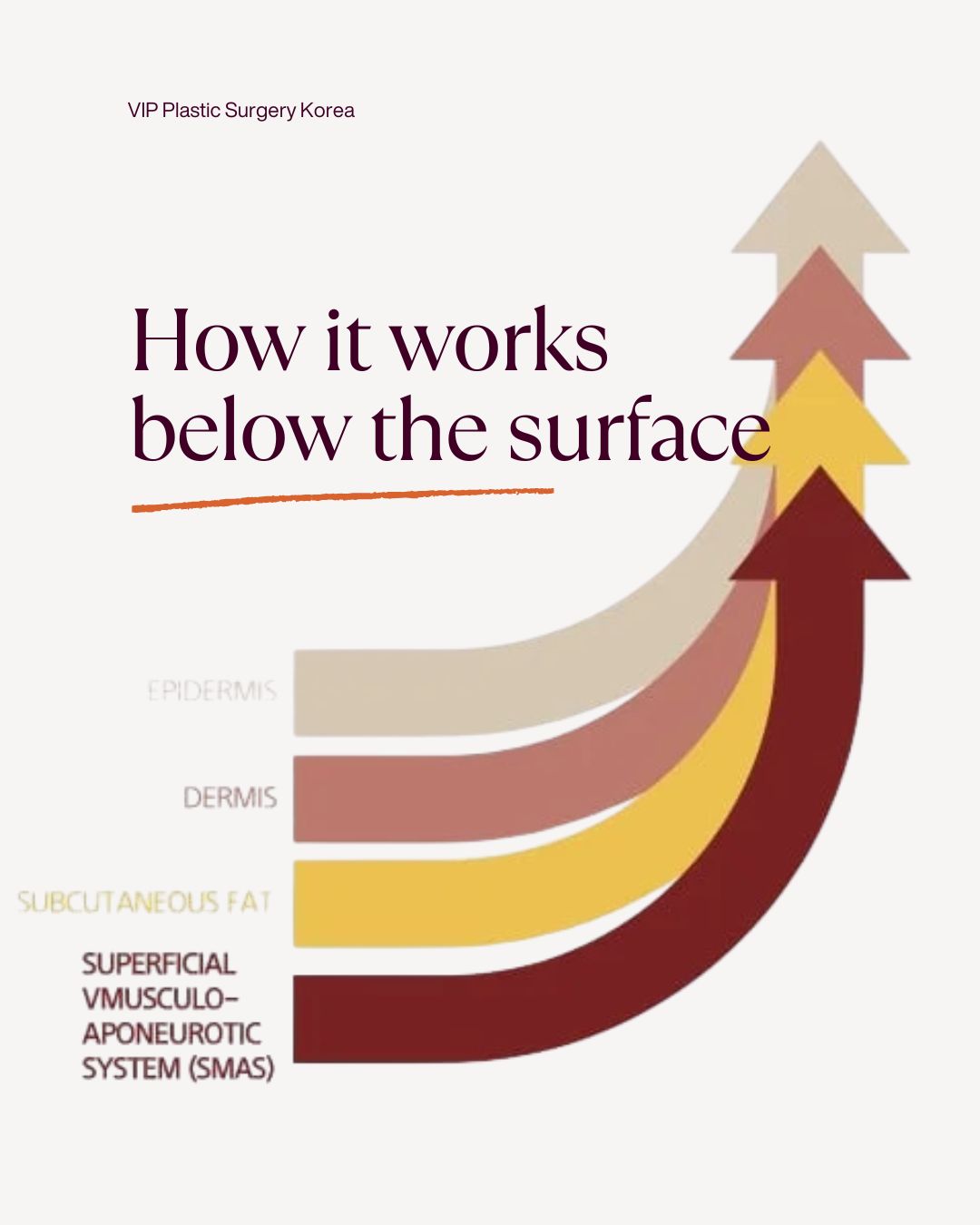
When filler enters tissues, it can weaken the natural planes that surgeons must navigate during a facelift. If fillers have caused fibrosis or caused layers to adhere together, the tissue may tear during dissection, or the lifting potential may be compromised.
02. Biostimulators Create Firm Adhesions
Materials designed to stimulate collagen production often cause tissue layers to stick together. Facelift surgery requires clean separation along specific planes. When tissues won’t separate properly, forcing the dissection increases the risk of structural damage.
03. Migration and Incomplete Removal Are Real Risks
Filler doesn’t remain confined to its injection site-it migrates. Attempting to remove it can pull surrounding tissues, creating irregularity. Depending on the depth and spread of the filler, complete removal may not be possible without affecting facial function.
04. Strategic Volume Restoration Matters
For small areas and fine wrinkles, low-volume hyaluronic acid can work well. However, using large filler volumes in the temples, forehead, or midface before facelift surgery is not ideal. For substantial volume needs, autologous fat grafting typically produces better results with less long-term tissue reaction.
04. Adequate Dissolution Intervals Are Essential
For patients with significant hyaluronic acid filler present, Dr. Lee recommends staged dissolution followed by a waiting period to allow tissues to settle. Operating through swollen or altered tissue planes increases unpredictability.

The Bottom Line for Facelift Planning
For anyone considering a facelift within the next one to three years, the recommendation is clear: avoid treatments that introduce fibrosis in the areas where facelift dissection occurs, and keep any interim procedures minimal and strategic.
Understanding the Core Problem
Fillers and thread lifts aren’t inherently problematic treatments. They serve specific purposes and can benefit the right patient at the appropriate stage of aging. However, it’s important to understand that laxity is fundamentally a mechanical problem that requires a mechanical solution-a facelift.
When temporary lifting procedures are repeated over time, costs accumulate while future surgical options become more limited and complicated.
Better Alternatives for Pre-Surgical Skin Investment
Rather than pursuing treatments that may compromise future surgery, many surgeons recommend focusing on maintaining excellent skin quality through:
- Comprehensive sun protection
- Medical-grade skincare regimens
- Pigmentation and texture management
- Devices that improve skin without scarring deeper tissue planes
These approaches support better surgical outcomes without creating obstacles for future dissection.
Questions to Ask Before Your Next Treatment
If you’re already considering a facelift as part of your long-term aesthetic plan, discuss these questions with your surgeon before pursuing additional non-surgical procedures:
- What is the primary driver of my aging concerns: volume loss, skin quality, or structural laxity?
- If I currently have hyaluronic acid or other fillers, should any be dissolved before surgery? Or should it not be dissolved?
- How might previous thread lifts affect my facelift dissection, results, or recovery?
- Which pre-operative skin treatments can benefit me without introducing tissue fibrosis?
Making Informed Decisions
If a facelift is part of your future plans, it’s worth having a consultation with your potential surgeon before adding threads or substantial filler volumes. This early conversation can help you:
- Save financially by avoiding treatments that may need to be reversed
- Reduce surgical complexity and risk
- Achieve better, more natural-looking results
- Potentially shorten recovery time
The goal isn’t to avoid all non-surgical treatments-it’s to make strategic choices that align with your long-term aesthetic vision.
This article is for informational purposes only and does not replace individualized medical advice. To explore personalized treatment planning and discuss your long-term facial rejuvenation goals, contact VIP Plastic Surgery for an online or in-person consultation.
by Jessica Rhee, Communication Manager at VIP Plastic Surgery
Published December 4th, 2025