









Double Chin Removal: Liposuction vs. Non-Surgical Treatments
March 16, 2026
Written by Yongwoo Lee MD, board-certified plastic surgeon specializing in blepharoplasty and anti-aging surgery at VIP Plastic Surgery, South Korea.
The Double Chin Dilemma: Beyond Diet and Exercise
A double chin, known in clinical terms as submental fullness, is one of the most frustrating aesthetic concerns a person can face. It rarely responds to willpower alone. And for patients considering double chin removal, this is exactly where the confusion begins.
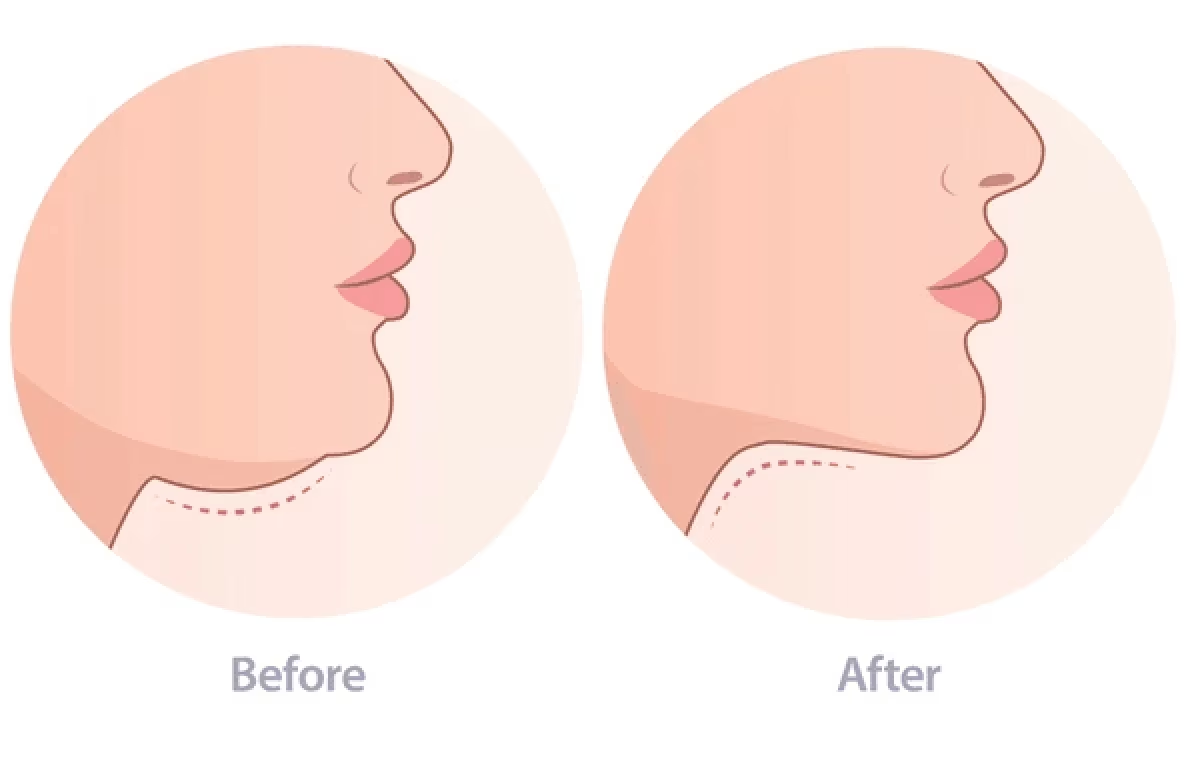
What makes a jawline look clean and youthful is a specific anatomical angle: the cervicomental angle. This is the sharp, defined line where the jaw meets the neck. When that angle is crisp, typically below 120 degrees, the face looks sculpted and balanced. When excess fat softens that angle, the jawline disappears into the neck, and the result is what most people call a double chin.
Here is the clinical truth that many patients find surprising: submental fat is overwhelmingly genetic. The body decides where it stores fat, and the area beneath the chin is often the last place to lose it and the first to gain it back. Months of disciplined dieting and intense cardio may slim the waistline, but the neck often stays unchanged.
This sends patients searching for solutions, and the market is more than happy to oblige. Non-surgical platforms like Shurink and Ultherapy promise jawline contouring without a single incision. Contouring injections offer a needle-based alternative. And then there is submental liposuction, the surgical option that has quietly remained the benchmark for decades.
This article cuts through the marketing to deliver the anatomical truth about double chin removal: what works, what doesn’t, and why the answer depends entirely on what is happening beneath the skin.
Non-Surgical Double Chin Treatments: Examining Devices and Injections
The appeal is obvious. No surgery. No general anesthesia. Walk in at lunch, walk out an hour later. Non-surgical double chin treatment has become one of the fastest-growing categories in aesthetic medicine, and it is easy to see why clinics promote it so aggressively. But understanding what these treatments actually do, and more importantly, what they cannot do, requires a closer look at the anatomy they are targeting.
How Shurink, Ultherapy, and Contouring Injections Work
Shurink (High-Intensity Focused Ultrasound): Shurink delivers concentrated ultrasound energy deep into the skin, targeting the tissue layer that sits just above the muscle. The energy creates tiny points of heat, around 60 to 70°C, which triggers the body’s natural healing response. Over the following two to six months, new collagen forms, and the skin gradually tightens. The keyword here is tightens. Shrinkage firms lose skin. It does not meaningfully reduce fat volume.
Ultherapy (High-Intensity Focused Ultrasound): Ultherapy works on a similar principle, using focused ultrasound to target the SMAS layer and the deep dermis. It stimulates collagen production through controlled thermal injury, producing a gradual skin-firming effect over several months. Like Shurink, Ultherapy is fundamentally a skin-tightening modality. Its capacity for fat reduction is negligible.
Contouring Injections (Fat-Dissolving Injections): Contouring injections contain lipolytic agents, substances that chemically break down fat cell membranes. When injected directly into the submental fat pad, these agents cause the fat cells to rupture. The body’s immune cells then arrive to clear the debris, a slow process that takes several weeks per session. Most patients need two to four treatments, spaced a month apart, to see visible results.
Why Non-Surgical Double Chin Treatments Have Limits
Each of these technologies is scientifically real. None of them are gimmicks. But they share a fundamental limitation: they can only reach the superficial fat layer, the thin deposit sitting just beneath the skin. The deeper structures that often contribute to a double chin remain completely untouched.
There is another constraint that matters. These are “blind” treatments. An ultrasound device cannot sculpt the jawline the way a surgeon’s hand can. It delivers a blanket of energy across the treatment area. Contouring injections diffuse through tissue without precision control. And in every case, the body’s own lymphatic system has to do the cleanup work, a process that is slow, unpredictable, and different for every patient.
For the right candidate, someone younger with good skin elasticity and only a small, soft pocket of superficial fat, these treatments can deliver a meaningful improvement. But for moderate to severe submental fullness, non-surgical double chin treatment alone frequently leads to underwhelming results and the quiet regret of money spent across multiple sessions with little to show.
Submental Liposuction: The Gold Standard for Jawline Sculpting
When the goal is a defined, permanent transformation of the jawline, submental liposuction remains the gold standard of plastic surgery in South Korea and worldwide. It is not the newest option. It is the most proven one.
How Submental Liposuction Is Performed
The procedure is far less dramatic than most patients imagine. Through a tiny incision, just two to three millimeters, hidden in the natural crease beneath the chin, the surgeon first infuses a tumescent solution. This solution contains a local anesthetic to numb the area, a medication to constrict blood vessels and minimize bruising, and saline to gently expand the fat layer for easier removal.
A slim micro-cannula is then inserted through the same incision. The surgeon guides it with careful, deliberate movements, breaking up the fat and suctioning it out permanently. The entire process provides constant tactile feedback. The surgeon can feel exactly how much fat remains, sculpting the jawline in three dimensions with a level of control that no device can replicate.
The procedure typically takes less than an hour under local anesthesia with light sedation. Most patients describe it as surprisingly comfortable.
Benefits of Submental Liposuction Over Non-Surgical Options
The fat is gone permanently. After adolescence, the body stops producing new fat cells. Once they are physically removed, they do not come back. As long as body weight stays reasonably stable, the sculpted jawline is a lasting change, not a temporary improvement that fades in a year.
The precision is unmatched. Unlike devices that deliver energy across the entire treatment zone, liposuction lets the surgeon define the mandibular border, sharpen the cervicomental angle, thin the jowl area, and balance both sides with millimeter-level control. This is not melting. This is sculpting.
One procedure. One result. Instead of committing to four, five, or six clinic visits over half a year for subtle incremental changes, liposuction accomplishes everything in a single session. The result is visible immediately beneath the compression garment and continues to refine as swelling subsides.
Recovery is brief and manageable. Mild swelling is expected, and a compression garment is worn for about a week to help the skin adhere smoothly to the newly contoured tissue. Most patients return to their normal routine within five to seven days. Residual swelling fades gradually over the following month.
The Hidden Architecture: Why Accurate Diagnosis is Crucial
This is the part of the conversation that too many clinics skip, and it may be the most important.
Not every double chin is caused by the same thing. Choosing a treatment before understanding the underlying anatomy is the single most common mistake in double chin removal. A board-certified plastic surgeon is trained to read the structural story beneath the skin and match the solution to the actual cause.
Surgeon’s Insight:
A truly successful double chin correction is not about how much fat is removed. It is about restoring the cervicomental angle, that clean, effortless line where the jaw meets the neck. When the result looks natural, with no hollows, no loose skin, no asymmetry, that is the mark of genuine anatomical understanding.
Every double chin has a different story. For one patient, the issue is a pocket of superficial fat. For another, it is a weakened platysma muscle that has separated down the midline. For a third, it is a recessed jawbone that robs the neck of its structural support.
The surgeon’s most important task is to diagnose this architecture accurately before recommending any treatment. Operating, or treating with any device, without understanding the foundation beneath the skin, is the reason so many interventions fall short. The anatomy must be read first. The instrument is chosen second.
Deep fat beneath the muscle. In some patients, the fat is not just under the skin. It sits beneath the platysma muscle of the neck, in a deeper compartment that no ultrasound device, injection, or standard liposuction cannula can safely reach. This requires a more targeted approach: a small incision, direct removal of the deep fat pad, and suturing the muscle edges together, a procedure called platysmaplasty. Without diagnosing this deep fat preoperatively, even excellent superficial liposuction will leave a patient wondering why the result feels incomplete.
Loose skin, not excess fat. For older patients or those who have lost significant weight, the double chin may not involve much fat at all. The real issue is skin that has lost its elasticity and muscle that has gone slack. Injecting a contouring solution or performing liposuction in this scenario only deflates the tissue that was keeping the skin supported, making the sagging worse, not better. The correct treatment here is a neck lift: removal of excess skin and tightening of the underlying muscle to restore a firm, youthful contour.
A recessed chin creating the illusion. If the chin bone itself is underdeveloped, a condition called micrognathia, the soft tissue of the neck has no structural scaffold to drape over. It pools forward, creating what looks like a double chin even in slim patients. The solution is not fat removal at all. It is chin augmentation: an implant or a bone advancement procedure that instantly restores the projection the jawline needs. The double chin disappears, without touching a single fat cell.
Double Chin Treatment Comparison: Liposuction vs. Contouring Injection vs. Shurink vs. Ultherapy
Before choosing a treatment path, it helps to see the key differences side by side. The following comparison summarizes how each modality performs across the criteria that matter most to patient outcomes.
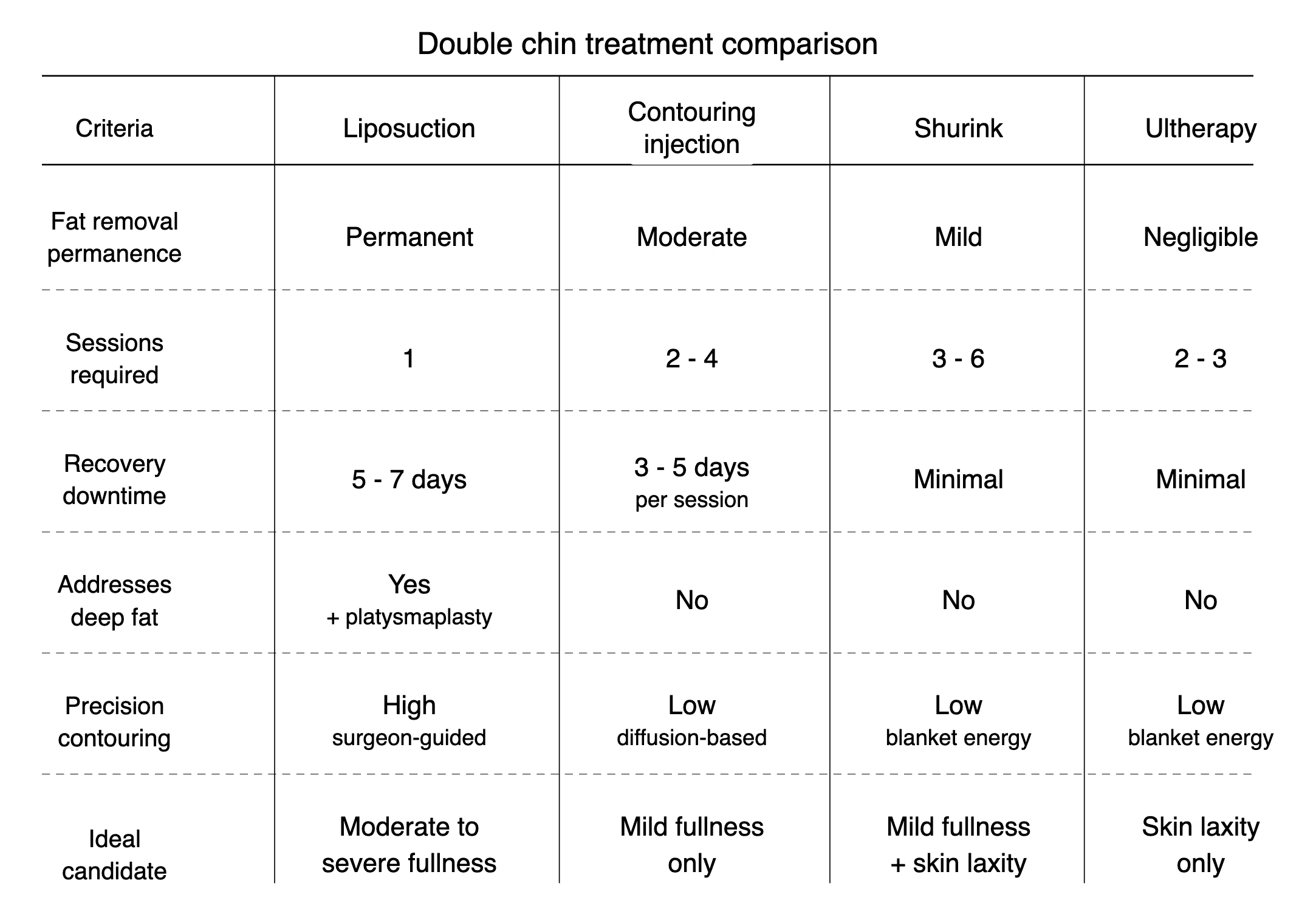
The pattern is clear. Submental liposuction is the only option that offers permanent removal, precision contouring, and the ability to address deep fat, all in a single session. Non-surgical double chin treatment works best within a narrow window: mild, superficial cases with good skin quality.
Conclusion: Anatomy Dictates the Solution
The promise of a non-surgical fix is tempting. And for the right patient, treatments like Shurink, Ultherapy, and contouring injections can play a genuine supporting role: maintaining skin firmness, addressing early signs of laxity, and refining results after surgery. They are legitimate tools with real, if limited, capabilities.
But they are not a replacement for surgical contouring when the anatomy calls for it.
For patients with moderate to significant submental fullness, submental liposuction, or the appropriate structural correction, whether platysmaplasty, neck lift, or chin augmentation, delivers a definitive result. One procedure. One recovery. A permanently redefined jawline.
The most important step is not choosing a treatment. It is getting an accurate diagnosis. Before investing in a multi-session non-surgical double chin treatment package, consulting with a board-certified plastic surgeon for a hands-on examination of tissue depth, skin quality, muscle tone, and bone structure is the decision that makes all the difference.
In the world of plastic surgery in South Korea and beyond, the anatomy always comes first. The right instrument follows.
Frequently Asked Questions (FAQ)
Q1: Does double chin liposuction leave a visible scar?
No. The incision is tiny, just two to three millimeters, and is tucked into the natural crease beneath the chin or behind the earlobe. Once fully healed, it is virtually invisible, even up close.
Q2: Will my skin sag after fat is removed via liposuction?
For most patients, especially those under fifty with reasonable skin elasticity, the skin retracts naturally around the new contour, almost like shrink-wrap. A compression garment worn during the first week helps this process along. In cases where skin quality is poor or laxity is significant, a surgeon will recommend combining liposuction with a skin-tightening procedure such as a neck lift to ensure a smooth, firm result.
Q3: How does the cost of submental liposuction compare to non-surgical treatments?
Session for session, non-surgical treatments look cheaper. But most patients need three to six sessions to see even modest results, and the cumulative cost frequently matches or exceeds the price of liposuction. The difference is that liposuction is a single investment delivering immediate, visible, permanent change. From a long-term value perspective, it is often the more cost-effective choice.
Q4: Is submental liposuction painful? What kind of anesthesia is used?
The procedure is performed under local tumescent anesthesia, often with light sedation for comfort. The tumescent solution numbs the entire treatment area thoroughly. Most patients feel only mild pressure during the procedure, not pain. Afterward, discomfort is typically described as a dull ache or tightness, easily managed with over-the-counter medication for a couple of days.
Q5: How long do the results of double chin removal last?
With liposuction, the results are permanent. Removed fat cells do not regenerate. However, the remaining cells in the area can expand with significant weight gain, so maintaining a stable weight preserves the sculpted contour. Non-surgical treatments, by contrast, tend to fade over one to two years and often require maintenance sessions.
Q6: Can non-surgical treatments completely replace liposuction for a double chin?
For patients with very mild submental fullness, good skin elasticity, and only a shallow layer of superficial fat, non-surgical options like contouring injections or Shurink can produce a satisfying improvement. But for moderate to severe cases, or when deeper structural factors like platysma laxity, subplatysmal fat, or a recessed chin are involved, non-surgical treatments cannot match the precision, permanence, or transformation that surgery provides. A proper anatomical evaluation is the best way to determine which path is right.
Q7: What is the best treatment for a double chin?
It depends entirely on the cause. For moderate to severe fat accumulation, submental liposuction is widely considered the gold standard: permanent, precise, and accomplished in a single session. For mild cases with good skin, non-surgical options may be sufficient. But if the double chin is driven by a structural issue, a weak chin bone, loose muscle, or sagging skin, the appropriate treatment may be chin augmentation, platysmaplasty, or a neck lift rather than fat reduction alone. The only way to know for certain is a hands-on consultation with a board-certified plastic surgeon.
Q8: Is double chin liposuction safe?
Very safe when performed by a board-certified plastic surgeon experienced in facial contouring. The procedure is minimally invasive, performed under local anesthesia, and carries a low complication rate. The most common side effects, mild swelling, bruising, and temporary numbness, resolve within days to weeks. Serious complications are rare and are minimized by proper surgeon selection and postoperative care.
All procedures carry inherent risks. This content is for informational purposes only and does not constitute medical advice. Consult a board-certified plastic surgeon before making any medical decisions.